White Label Web Development: How Agencies Outsource Websites Under Their Own Brand
White label web development lets agencies sell websites without hiring developers. Here's how it works, what it costs, what to put in the contract and how to choose a reliable partner.
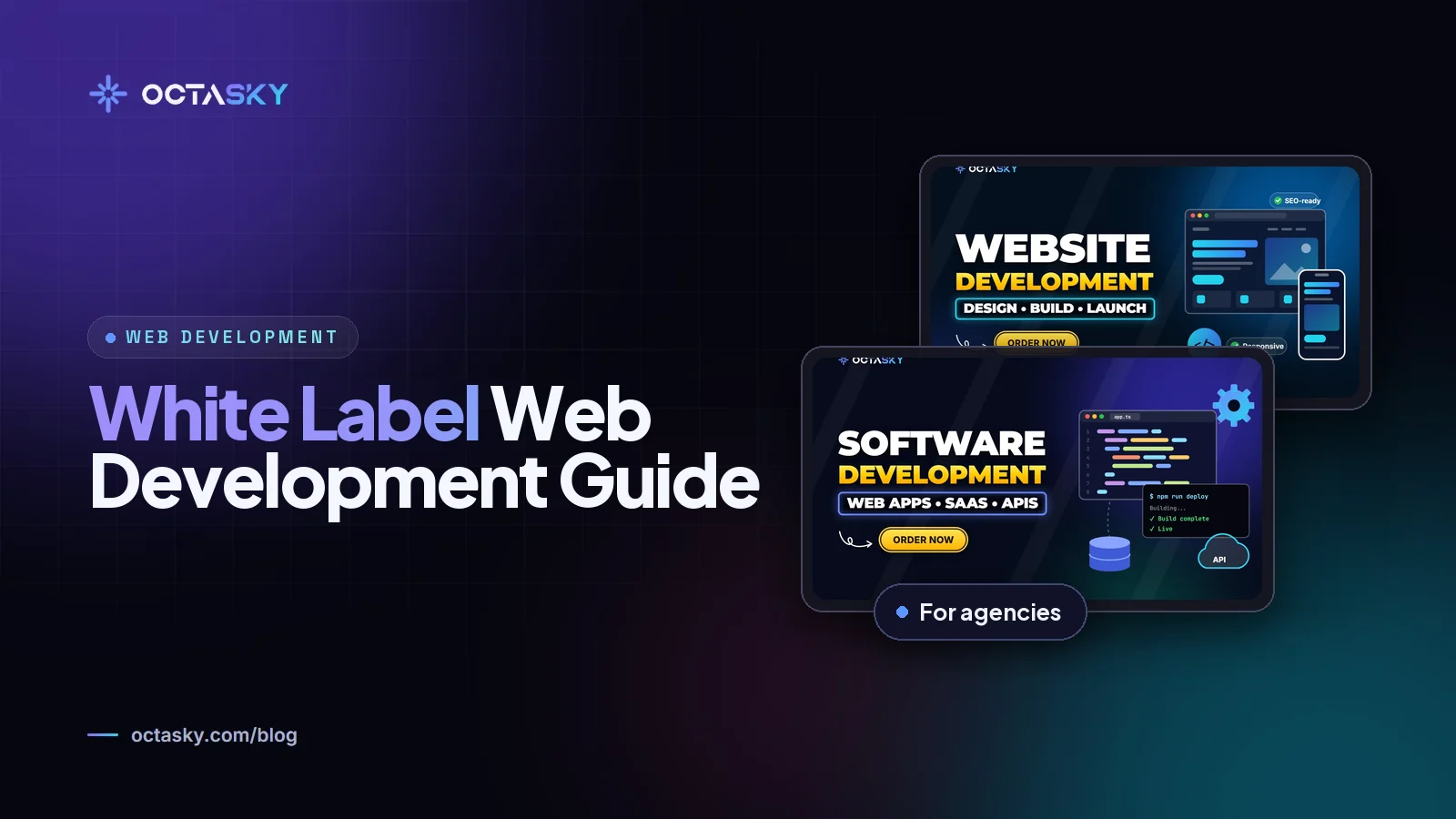
Marketing agencies, SEO firms and freelancers often win website projects they don't have the team to build. White label web development solves that: a partner builds the website behind the scenes and you deliver it to your client under your own brand. Done well, it lets you grow revenue without hiring developers. Done badly, it damages client relationships you worked hard to win.
This guide explains how white label web development works, typical pricing models, what to put in the agreement and how to choose a partner you can trust.
What is white label web development?
A white label web development partner designs, builds, tests and sometimes maintains websites that you sell as your own work. Your client deals with you; the partner never contacts them unless you agree otherwise. You set the price, manage the relationship and keep the margin.
Common white label services include:
- Website design and development (WordPress, Shopify, Webflow or custom)
- Landing pages for campaigns
- E-commerce stores
- Website redesigns and migrations
- Speed optimisation and technical SEO fixes
- Ongoing maintenance and support
Why agencies use white label developers
- No hiring risk. You don't carry salaries, training and software costs when work is quiet.
- More services. An SEO or ads agency can sell websites without building a dev team.
- Faster delivery. An experienced partner already has processes, templates and testing routines.
- Better margins. Partners in lower-cost countries can let agencies in the US, UK and Europe keep healthy margins while staying competitive.
- Specialist skills. Access to developers who build websites every day.
How white label projects usually work
- You win the project and gather requirements from your client.
- You brief the partner with the sitemap, content, brand assets and deadline.
- The partner designs and builds, sharing progress privately with you.
- You present the work to your client under your brand and collect feedback.
- The partner makes revisions, tests and prepares launch.
- You launch and hand over, with the partner often providing support behind the scenes.
The best partnerships feel like an extension of your own team: shared project tools, clear contacts and predictable turnaround.
White label web development pricing models
Partners usually price in one of three ways:
- Per project: a fixed price for a defined website. Easy to resell with your own markup.
- Hourly or per task: useful for small changes, fixes and maintenance.
- Dedicated developer or retainer: a monthly fee for a set amount of capacity. Often the best value once you have steady work.
Whatever the model, insist on itemised quotes that list pages, features, revision rounds and what's excluded, so you can quote your client accurately.
What to put in a white label agreement
- Confidentiality: the partner won't contact your clients or show the work publicly without permission.
- Ownership: you (or your client) own the code, design and content once paid.
- Non-solicitation: the partner won't approach your clients directly.
- Scope and revisions: what's included in each project and how changes are priced.
- Timelines: turnaround for each stage and for your feedback.
- Support: who fixes bugs after launch and for how long.
- Data protection: if client data is involved, how it's handled under GDPR and UK GDPR.
How to choose a white label web development partner
- Check real work. Ask for live sites, not just screenshots.
- Test communication. Do they reply quickly and clearly, in good English?
- Start with a small project before handing over a big client.
- Ask about process: staging sites, testing, speed checks and SEO basics.
- Check time zones. A partner a few hours ahead can finish work while you sleep.
- Agree on tools for tasks and files, ideally ones you already use.
Our guide on how to choose a software house in Pakistan has more due-diligence questions that apply to any offshore partner.
White label web development FAQ
Is white label web development legal?
Yes. It's a normal subcontracting arrangement. Just make sure your agreement covers confidentiality, ownership and what you tell your clients.
Will my clients know I outsourced the work?
Not unless you tell them. A good partner works only through you and never brands the work as their own.
What platforms do white label developers use?
Most work with WordPress, Shopify and Webflow, and many also build custom sites and web apps. Choose a partner who is strong on the platforms your clients prefer.
How much margin do agencies make on white label websites?
It varies by market and positioning. Many agencies add a significant markup to cover project management, strategy and client service, which is the value they bring.
Grow without growing your payroll
White label web development lets your agency say yes to more projects while staying lean. Choose a partner who communicates well, works to your process and protects your client relationships.
OCTASKY provides white label website design and development for agencies in the US, UK and Europe, with confidentiality agreed in writing. Tell us about your agency and we'll suggest a partnership model and send sample pricing.
Need help with this?
OCTASKY's team of 15+ designers, developers, editors and animators can take it off your plate. Tell us about your project and we'll reply with ideas and a clear quote.