28 Cash Cow YouTube Channel Ideas for 2026 (Faceless Niches That Can Work)
28 faceless cash cow YouTube channel ideas grouped by category, with the format for each, why it can work, and an honest look at competition and YouTube's monetization rules.
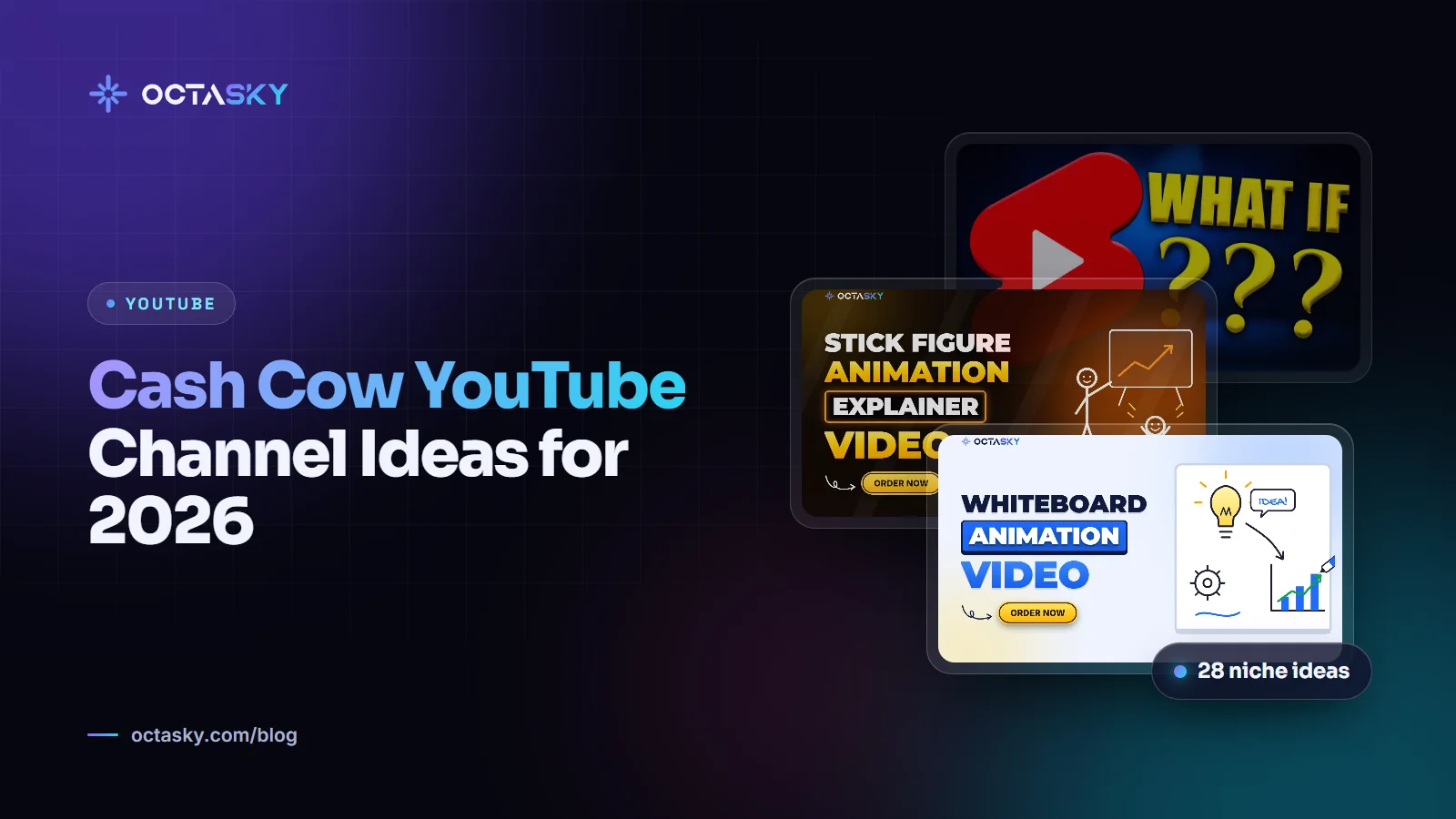
Looking for cash cow YouTube channel ideas? A cash cow YouTube channel is a faceless channel run like a small media business. You choose the topic and the quality bar, and a team (or you, with some help) researches, writes, voices and edits the videos. The name promises easy money. The reality is closer to running a small studio, with no guaranteed income.
Below are 28 faceless YouTube channel ideas for 2026, grouped by category, each with a format and a reason it can work. We've named a couple of real faceless channels as examples where they help, and flagged where competition is tough and which formats run into YouTube's monetization rules.
How to judge cash cow YouTube channel ideas
Before you pick an idea, test it against five questions:
- Depth: can you list 50 or more video titles without stretching?
- Advertiser value: topics like finance, business, software and education tend to attract higher-paying ads than pure entertainment.
- Competition: search the topic on YouTube. If large studios own every top result, find a narrower angle.
- Production cost: can you make a strong video in this format every week at a cost you can sustain?
- Originality: what will you add that other channels don't: research, explanation, story or better visuals?
YouTube's monetization policy doesn't reward mass-produced or repetitive videos, so originality isn't optional. For the production side, see our guide on how to start a faceless YouTube channel.
Money, business and careers
Higher advertiser value, but crowded. You win with a specific audience.
- Personal finance for one audience: whiteboard or motion-graphics explainers on budgeting and saving for freelancers, students or new parents. Finance audiences attract strong advertisers, and a narrow audience is easier to stand out in.
- Company rise-and-fall stories: narrated documentaries using archive images, charts and stock footage. Brand stories are evergreen, though established channels like Company Man already cover the big names, so look for overlooked companies or regions.
- Side hustle walkthroughs: screen recordings showing step by step how to, for example, sell AI artwork as prints. Viewers search with clear intent and affiliate links fit naturally, as long as you avoid inflated income claims.
- Small business how-tos: tutorials on setting up a Shopify store, writing Etsy listings or using invoicing tools. Business owners are valuable to advertisers and sponsors.
- Career and interview skills: animated scenarios showing interview answers, emails or salary talks. Demand is evergreen and global.
- Economics explained simply: animated answers to questions like why prices rise or how exchange rates work. The news keeps creating new topics.
Tech, AI and software
Search demand is high, and videos date quickly, which keeps the topic list fresh.
- AI tool tutorials: screen recordings with a clear voiceover. People search for exact how-to answers, but you'll need to update videos as tools change.
- Software comparisons: "Tool A vs Tool B" breakdowns with real demos. Viewers close to buying are attractive to sponsors and affiliate programs.
- How technology works: 2D animation explaining GPS, Wi-Fi or batteries. Curiosity-driven and evergreen.
- Scam and cybersecurity awareness: explainers on phishing and online fraud. Genuinely useful and shareable, if you stay factual rather than sensational.
Education and explainers
Strong for animation and storytelling, and often advertiser-friendly.
- "What if" hypotheticals: animated Shorts or long videos such as "what if the Moon disappeared". Curiosity hooks travel well, but the format is crowded, so ground every answer in real science.
- History stories: narrated documentaries with maps and archival images. Interest is huge and evergreen; make sure every image is public domain or licensed.
- Geography and maps: map animations explaining borders, cities and trade routes. Visual, repeatable and hard to copy lazily.
- Social issues explained: explainers such as why girls' education matters, built on credible sources. They can attract NGO and education partners, but need careful research and a respectful tone.
- Book lessons: your own analysis of a book's key ideas with whiteboard animation or kinetic text. Popular, but add commentary and examples; never read out or copy the book.
- Language learning: phrases, grammar and pronunciation with on-screen text, such as English for Urdu speakers. Learners watch in series and come back.
Stories and entertainment
Big audiences, but often lower ad rates, so you need volume, sponsors or both.
- Stick figure storytelling: simple animated stories and life lessons. Fast to produce once your style is set; see our guide to stick figure animation for YouTube.
- True crime and mysteries: researched narration with documents and maps. Very competitive, and graphic detail can limit ads under YouTube's advertiser-friendly guidelines, so stay respectful to victims.
- Folk tales and myths: illustrated or animated stories from world cultures. Often less crowded in regional languages.
- Film and TV analysis: commentary on story, themes or production. Use short clips with real commentary, because compilations without it fall under the reused content policy, and copyright claims are common.
- Researched rankings and comparisons: "cheap vs expensive" or top-10 videos backed by real testing or data. A proven format, and the research is what separates you from lazy lists.
Lifestyle and how-to
Hands-only filming keeps these faceless and genuinely original.
- Hands-only cooking: recipes filmed from above. Channels like Cooking Haru show the format can work without a face on screen.
- Gardening and houseplants: care guides and growth time-lapses. Seasonal topics come back every year.
- DIY and home repair: step-by-step fixes filmed close up. Strong search demand from people with a real problem.
- Travel planning guides: maps, licensed footage and practical tips. Useful but competitive, so local knowledge is your edge.
- Pet care: training tips and breed explainers. Loyal audiences and natural product sponsors.
Gaming and ambient
- Gaming guides and highlights: gameplay with tips, analysis or commentary, like PUBG strategy breakdowns. Huge demand, but fierce competition and often lower ad rates; check each publisher's policy on monetizing footage.
- Study, sleep and ambient audio: original recordings or properly licensed music for focus and sleep. Viewers watch for a long time, but this is where mass-produced loops get demonetized, so make the sound genuinely original.
Monetization rules and ideas to avoid
Ideas to avoid or handle with care
- AI voices reading Reddit stories over gameplay clips, and other templated videos with tiny changes.
- AI image slideshows with scrolling text and no real narration.
- Compilations of other people's clips, movie scenes or songs. YouTube says collections of songs from different artists don't qualify, even with permission.
- Celebrity "net worth" videos built on scraped photos and guesses.
- Mass-produced kids' animation. Videos set as made for kids don't get personalized ads and lose features like comments, which can reduce revenue.
Rules that decide whether an idea earns
- Partner Program: currently 1,000 subscribers plus 4,000 qualified watch hours in 12 months, or 10 million qualified Shorts views in 90 days. YouTube has announced Partner Program updates from February 1, 2027, and press reports say new applicants will then need 8,000 watch hours or 20 million Shorts views, so check the official page.
- Inauthentic content: templated storylines and slideshows with minimal narrative aren't eligible to earn.
- AI disclosure: realistic altered or synthetic content must be disclosed when you upload.
- Other income: affiliate links, sponsorships and your own products can matter as much as ads, especially in business and tech niches.
Tip: Pick the idea where you can add something others can't, such as deeper research, local knowledge or better visuals. Copying a viral channel's format is the fastest route to a crowded, low-value channel.
FAQ: cash cow YouTube channels
Do cash cow YouTube channels still work in 2026?
Faceless, outsourced channels can still grow, but the low-effort version is risky. YouTube's 2025 policy update targets mass-produced content, so channels that add real research, story and original visuals are the ones with a future.
How do I make a cash cow YouTube channel?
- Choose a niche using the five questions above.
- Build a repeatable format and a list of 50 titles.
- Script, voice, edit and design thumbnails to a fixed standard.
- Publish on a schedule you can afford for at least six months.
- Improve using retention and click-through data.
How much does it cost to start one?
The main cost is production: scripts, voiceover, editing and thumbnails for every video. Prices vary widely by quality and length, and our guide to hiring a YouTube automation agency breaks down rough costs.
Can I use AI voices and AI visuals?
Yes, many channels do, but disclose realistic synthetic content and make sure the final video still offers original value. AI should speed up good work, not replace it.
Choose an idea you can sustain
Of all the cash cow YouTube channel ideas above, the best one for you is the one you can make 100 good videos about, at a cost you can keep paying, with something original in every episode. Test a niche with a small batch of videos before you scale.
OCTASKY's team in Multan produces faceless channel content, from scripts and voiceover to 2D, whiteboard and stick figure animation, editing and thumbnails, and we can share samples and a clear quote for your niche.
Need help with this?
OCTASKY's team of 15+ designers, developers, editors and marketers can take it off your plate. Tell us about your project and we'll reply with ideas and a clear quote.
Chat on WhatsApp