The Brand Identity Design Process: 7 Steps From Research to Brand Guidelines
A step-by-step guide to the brand identity design process: research, strategy, concepts, logo, colour and type, applications and brand guidelines, plus what you should receive at the end.
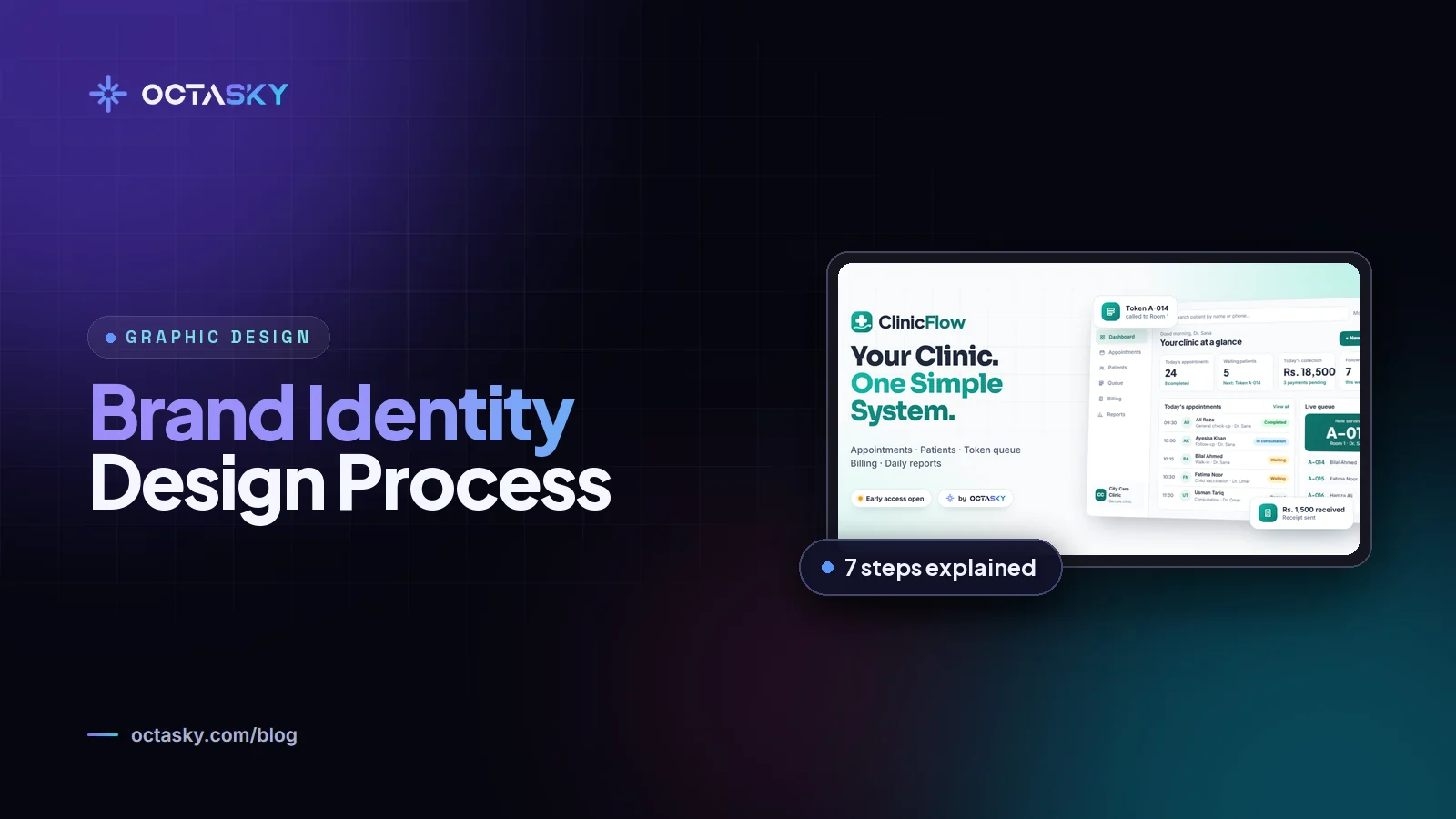
A logo is only one piece of a brand. The brand identity design process turns who you are, who you serve and how you're different into a visual system: logo, colours, typography, imagery and the rules that keep them consistent. Skip the early steps and you get a nice-looking logo that doesn't fit your business. Follow them and you get an identity that works for years.
Here's the process most professional designers follow, step by step, and what you should receive at the end.
Step 1: Discovery and research
Every good identity starts with questions, not sketches:
- What does the business do, and for whom?
- What makes it different from competitors?
- What personality should it have: premium, friendly, bold, technical?
- Where will the brand appear: website, packaging, signage, social media, uniforms?
Designers also review competitors and the wider market to see what's overused and where there's room to stand out.
Step 2: Strategy and positioning
Research turns into direction. Typical outputs include a short positioning statement, three to five brand attributes ("clear, warm, expert") and the tone of voice. This becomes the brief every design decision is checked against.
Step 3: Moodboards and creative direction
Before designing the logo, many designers create moodboards: collections of colours, type, imagery and references that show possible directions. Agreeing on a direction here prevents the classic problem of loving a logo concept that doesn't match the brand.
Step 4: Logo concepts
Designers explore ideas on paper and screen, then present a few strong concepts, each explained in relation to the strategy. Expect early concepts to be less polished than the final logo. The goal is to choose the right idea, not the prettiest file.
Good logos are:
- Simple enough to recognise at small sizes
- Distinctive in your market
- Flexible across light and dark backgrounds
- Readable in one colour
Step 5: Colour, typography and visual elements
Once the logo direction is approved, the identity expands:
- Colour palette: primary and secondary colours with exact values for print and screen, checked for accessible contrast.
- Typography: headline and body fonts, with licences confirmed.
- Supporting elements: patterns, icons, illustration or photography style.
Step 6: Applications and testing
The identity is tested on real touchpoints: website header, social profiles, business cards, packaging, slides and signage. This often reveals tweaks, such as a thicker logo line for small sizes or a darker shade for readability.
Step 7: Brand guidelines and handover
Finally, everything is documented in brand guidelines so anyone can apply the identity correctly. Many businesses also start trademark searches or registration at this stage.
What you should receive at the end
- Logo in all versions (full, icon, horizontal, stacked), colour and one-colour
- Vector and high-resolution files (AI, SVG, PDF, PNG)
- Colour codes (HEX, RGB, CMYK, and Pantone if needed)
- Font names and licensing details
- Brand guidelines PDF
- Social media templates or profile images
- Favicon and app icon if relevant
How long does the brand identity design process take?
Small business identities often take a few weeks; larger projects with more research and applications take longer. Most delays come from feedback rounds, so agree on who approves each stage.
If you're comparing budgets, our guide to logo design prices explains what different price levels usually include.
Brand identity design process FAQ
What is the difference between a logo and a brand identity?
A logo is a single mark. A brand identity is the full visual system: logo, colours, typography, imagery and the rules for using them.
How many logo concepts should a designer show?
Many designers present two to four focused concepts. More isn't always better; a few well-reasoned options are easier to choose from.
Do I need brand guidelines as a small business?
Yes, even a short version. Guidelines keep your website, social media and printed materials consistent as more people create content for you.
Can you rebrand without losing recognition?
Yes. An evolution keeps familiar elements, such as colour or a symbol, while modernising the rest.
A brand that works everywhere
A strong brand identity comes from a clear process: understand the business, agree on a direction, design the core elements, test them in real life and document the rules.
OCTASKY designs logos and complete brand identities for startups and small businesses in the US, UK and Europe, and can carry the new brand into your website. Tell us about your business and we'll send an itemised quote.
Need help with this?
OCTASKY's team of 15+ designers, developers, editors and animators can take it off your plate. Tell us about your project and we'll reply with ideas and a clear quote.